
Entering the world of cryptocurrency means you need a secure place to store your digital assets. This is where a crypto wallet becomes essential. Our beginner guide to crypto wallets will walk you through everything you need to know, from understanding the core concepts of private keys to choosing the right type of wallet that fits your needs, ensuring your investments are safe and accessible.
What is a crypto wallet and why you need one

The gateway to digital ownership
A crypto wallet is an essential tool for managing your digital assets on the blockchain. It does not store your coins directly like a physical wallet holds cash. Instead, it securely stores your private keys, which are the secret codes that prove your ownership and allow you to access your funds. Think of it as your personal interface to the decentralized world, where you are in complete control. This concept is a core part of any beginner guide to crypto wallets.
Your keys, your crypto. This is the fundamental principle of self-custody that crypto wallets enable. Without a wallet, you are relying on a third party like an exchange to hold your assets for you.
You need a wallet to interact with any blockchain network. It is your passport for investing in cryptocurrencies, using decentralized applications, or collecting NFTs. Having a wallet means you have true ownership and can transact freely without needing permission from a bank or corporation. It is the first step toward participating in the decentralized economy.
Understanding public keys private keys and seed phrases

Understanding these three components is essential for managing your crypto securely. They are interconnected and each serves a critical function in protecting your digital assets. Mismanaging them can lead to a permanent loss of funds, a vital lesson in any beginner guide to crypto wallets. Grasping their roles from the start is non-negotiable for safe participation in the crypto space.
- Public Key: This is like your bank account number. You can share it freely with others to receive cryptocurrency. Your public address, used for transactions, is a shorter version of this key.
- Private Key: This is your secret password or PIN. It grants access to spend your crypto by signing transactions. You must never share your private key with anyone, as it gives them full control over your funds.
- Seed Phrase: Also known as a recovery phrase, this is a list of 12 to 24 words that acts as a master backup. It can restore your entire wallet if you lose your device. Protecting it from scams, such as phishing attempts through undefined, is your most important security responsibility.
The main types of crypto wallets explained
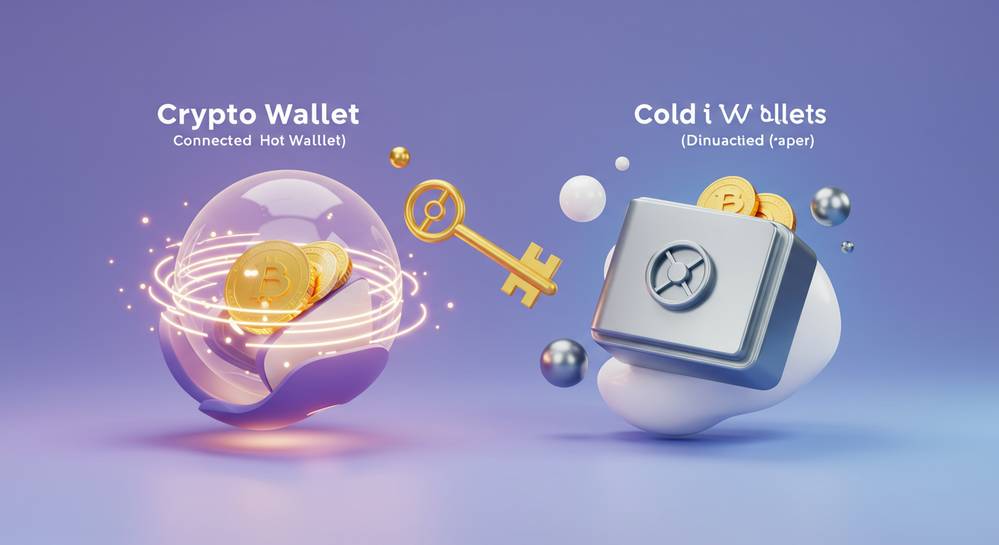
Crypto wallets are mainly categorized by their connection to the internet. This key difference creates two types: hot wallets and cold wallets. Understanding this distinction is a crucial part of any beginner guide to crypto wallets, as it directly impacts the balance between convenience and security for your digital assets. Your choice depends on how you intend to use your cryptocurrency.
Hot wallets for daily use
A hot wallet is any wallet connected to the internet, such as a mobile app or browser extension. This constant connectivity makes them incredibly convenient for frequent transactions and interacting with decentralized applications. They are the go-to option for active traders and daily users.
- Pros: Highly accessible, simple to use, and typically free.
- Cons: More undefined like hacking and phishing.
Cold wallets for long-term security
A cold wallet is a physical device that stores your private keys completely offline. It only connects to a device when you need to authorize a transaction, ensuring your keys are never exposed to the internet. This makes them the gold standard for securing large amounts of crypto for the long term.
- Pros: Maximum security against digital threats.
- Cons: Less convenient for quick access and require a purchase.
How to choose the right crypto wallet for you
Selecting the perfect wallet comes down to your individual needs and risk tolerance. The right choice is a balance of security, convenience, and functionality. This is a crucial lesson in our beginner guide to crypto wallets. Before making a decision, consider the following key factors to ensure your assets are both safe and accessible when you need them.
- Your purpose: Are you a long-term investor or an active trader? For long-term holding, a cold wallet is superior for security. For frequent trading, a hot wallet offers better convenience.
- Security: Hardware wallets offer the best protection but come at a cost. If using a software wallet, research its reputation, security features, and user reviews to gauge its reliability.
- Supported assets: Ensure the wallet supports all the cryptocurrencies you own or plan to acquire. Some wallets are single-asset, while others support thousands of different coins.
- Ease of use: If you are a beginner, look for a wallet with a clean, intuitive user interface. A complex wallet can increase the risk of making mistakes.
A common strategy is to use both. A hardware wallet can secure the majority of your funds, while a software wallet holds a small amount for daily use and trading.
Choosing your first crypto wallet is a critical step in your journey into digital assets. The right wallet is your gateway to the blockchain, offering a balance of security and accessibility tailored to your needs. Always remember that with self-custody comes great responsibility. Safeguard your private keys and seed phrase above all else. For more expert insights and guides, explore everything on Blockchain Global Network.
RELATED POSTS
What is Proof of Stake? A Deep Dive into Blockchain Consensus
In the rapidly evolving world...
Crypto Currency on Futureverse – Breakthrough for the Future of Digital Finance
Crypto currency on Futureverse represents...
BulbaSwap Airdrop: A unique investment opportunity in DeFi
BulbaSwap, a decentralized exchange (DEX)...
Crypto news predictions – Key Trends in the future
Crypto news predictions are essential...
Mapping Opportunities with Funding Rate Heatmap
In the fast-paced trading world,...
How does DALLE work? A Comprehensive guide to AI Art generation
How does DALLE work? This...
Fuel Airdrop – Grab the opportunity to receive free Fuel tokens
The Fuel airdrop is an...
Understanding the Stock to Flow Model – How to Optimize Investment
The Stock to Flow Model...
How the U2U Contract Address Powers Decentralized Transactions
The U2U Contract Address is...
What are distributed systems? Bridging the Gap Between Efficiency and Complexity
In today’s digital age, the...
Blast Airdrop – Tips for Earning KRO Tokens Easily
Earning KRO tokens from the...
Seer Airdrop: A chance to receive free SEER Tokens
Seer Airdrop is attracting the...
A Slice of History – The First Recorded Bitcoin Purchase and Its Impact Today
The First Recorded Bitcoin Purchase...
Forgotten Runiverse: A promising NFT Game on Ronin Network
Forgotten Runiverse is emerging as...
Grindery Airdrop – Earn G1 and GX Tokens Easily!
Grindery airdrop, supported by Binance...
What are ledgers legit emails?
What are Ledgers legit emails?...